From Ember-Roasted Aubergine to Söğürme Kebab
In Anatolian cuisine, the story of certain dishes begins with the cooking technique rather than the ingredients. Tandır, stone ovens, saj grills and embers determine not only how a dish is cooked but also what kind of flavour it will acquire.
Söğürme stands as one of the most distinctive examples of this ancient culinary tradition.
Especially in South-Eastern Anatolian cuisine, the meeting of aubergine with fire—the charring of its skin, the softening of its flesh, and its subsequent mincing or mashing—is an important part of the söğürme tradition.
However, söğürme is not merely a matter of “grilled aubergine”. The term is used differently across various regions of Anatolia: in some areas, it refers to a preparation technique, while in others, it denotes the dish itself.
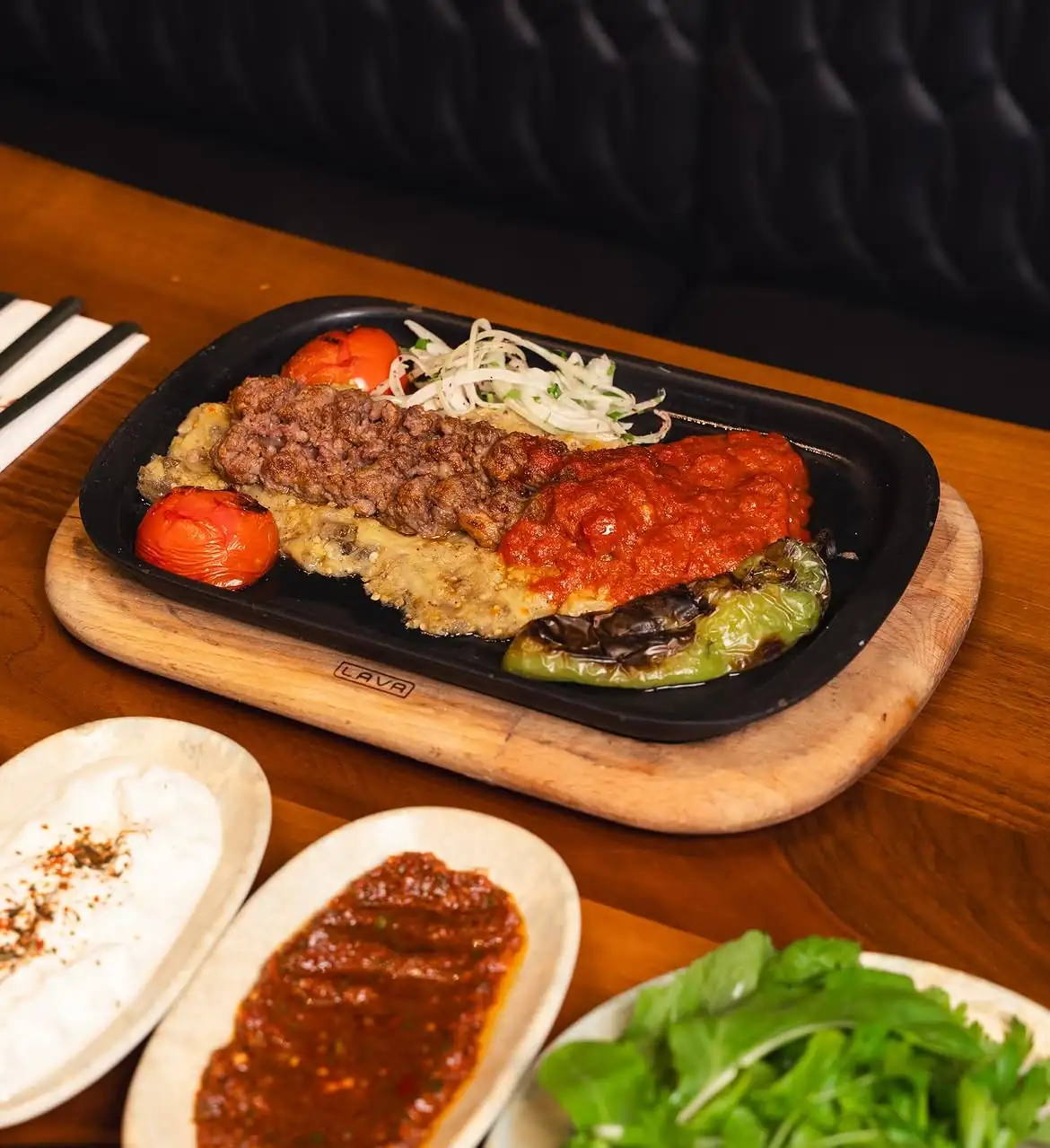
Today, the Söğürme Kebabı we encounter at the table brings together the distinctive smoky character of grilled aubergine with the robust flavour of meat.
So, what is söğürme, how is aubergine söğürme prepared, and how does fire transform an ordinary aubergine into a dish so characteristic of Anatolian cuisine?
What Is Söğürme?

It would not be accurate to offer a single definition of söğürme that applies to all of Anatolia.
In Gaziantep cuisine, “söğürme” is one of the local terms used to describe the process of grilling aubergine over an open flame. Once the aubergine is grilled, its skin is removed, and the flesh is chopped, mashed or pounded to form the basis of various dishes.
In other parts of Anatolia, however, the term söğürme may also be applied to different meat dishes and preparation methods.
For this reason, it is more accurate to regard söğürme not merely as the name of a dish, but as a culinary culture that has developed around fire, embers and traditional cooking practices.
The Story of Söğürme Begins in the Fire
Aubergine is one of the most versatile vegetables in Anatolian cuisine.
It is fried, baked, made into stuffed dishes, placed between kebabs, combined with yogurt, and grilled directly over an open flame.
However, when eggplant comes into direct contact with fire, it takes on a completely different character.
While the skin darkens at high temperatures, the inside gradually softens with its own moisture. A light smoky aroma from the fire permeates the eggplant.
The true character of söğürme begins to take shape here.
First Stage: Roasting the Aubergine
In the traditional method, the aubergine is roasted directly over an open flame.
The aim here is not merely to cook the vegetable. It is necessary to transfer the aroma produced by the fire to the aubergine.
When properly embers-roasted, the interior of an aubergine becomes entirely soft, while its outer skin loosens sufficiently to be easily removed.
However, a delicate balance is essential during embers-roasting.
If the heat is insufficient, the aubergine may cook through without developing the desired smoky character. Conversely, excessive heat can cause the subtle smokiness to give way to an overpowering burnt flavour.
Consequently, although embers-roasting appears straightforward, it demands careful control of the heat.
Second Stage: Removing the Skin
Once embers-roasting is complete, the charred outer skin of the aubergine is carefully removed.
Beneath it emerges tender, juicy aubergine flesh infused with a smoky aroma.
At this stage, it is important that the aubergine does not lose all its moisture. A significant portion of its flavour is retained within this soft, moist texture, which develops during embers-roasting.
Third Stage: Chopping, Mashing or Pounding
The embers-roasted aubergine, now skinned, is prepared to attain the distinctive texture characteristic of söğürme.
Depending on the regional recipe, it may be finely chopped with a knife, mashed or pounded.
The objective here is to transform the aubergine from an ordinary embers-roasted vegetable into one of the dish’s principal components.
The bed of charred aubergine to be served beside or beneath the meat is now ready.
Why Do Charred Aubergine and Meat Complement Each Other So Well?
In Anatolian cuisine, the frequent pairing of aubergine and meat is no coincidence.
The meat possesses a robust and intense flavour.
Charred aubergine, with its soft texture and subtle smokiness, balances this intensity.
In dishes prepared especially with lamb or minced meat, aubergine is more than a mere garnish. It becomes one of the foundational ingredients, carrying the meat’s fat and aroma and transforming the dish’s overall character.
This combination appears under different dish names across various cities of Anatolia.
Söğürme Is Not Limited to a Single Dish
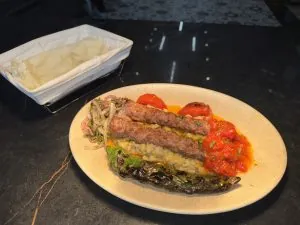
One of the finest aspects of the pairing of charred aubergine and meat is that it is not confined to a single region or recipe.
In Gaziantep cuisine, Alinazik is prepared by combining charred aubergine with yoghurt and garlic, before being completed with meat.
In Şanlıurfa cuisine, Kıymalı Söğürme is one of the regional dishes in which grilled aubergine is combined with minced meat.
The fact that Urfa Kıymalı Söğürme has been registered with a geographical indication also demonstrates that the combination of grilled aubergine and meat does not belong exclusively to modern restaurant kitchens.
The roots of this combination extend back to traditional home kitchens and Anatolia’s longstanding relationship with fire.
Are Söğürme and Alinazik the Same Thing?
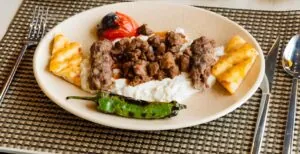
No.
Although the two dishes appear similar, they are not the same.
In Gaziantep cuisine, aubergine for Alinazik is embers-roasted, peeled and finely chopped. It is then combined with garlic yoghurt, after which meat is added on top.
Here, söğürme is one of the fundamental techniques used in preparing the dish.
Alinazik, by contrast, is a separate dish in which this technique is completed with yoghurt and meat.
This distinction is important for understanding the richness of Anatolian cuisine.
This is because the same embers-roasting technique can be combined with different ingredients in different cities, giving rise to entirely distinct dishes.
What Is the Difference Between Söğürme and Geleli Kebabı?
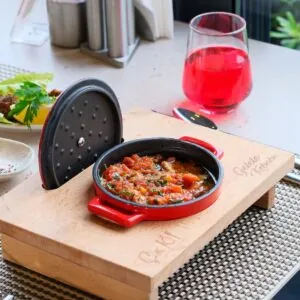
Söğürme and Geleli Kebabı may appear similar, particularly because both use embers-roasted aubergine.
However, the two dishes have different culinary identities.
In Geleli Kebabı, which is closely associated with Malatya cuisine, embers-roasted aubergine forms part of a broader dish structure that also includes meat, tomato and pepper.
In söğürme, the central element is the transformation undergone by the aubergine over the fire.
Therefore, to understand Geleli Kebabı, one must first consider Malatya cuisine’s union of meat and vegetables; to understand söğürme, one must first observe what the embers do to the aubergine.
Although the same ingredients and a similar fire are used, the resulting culinary character differs.
Where Does Mastery Begin in Söğürme Kebabı?
In dishes such as söğürme, which appear simple in their ingredients, minor errors are not easily concealed.
If the aubergine is not properly embers-roasted, the flaw is perceptible.
If the meat is overcooked, the flaw is perceptible.
If the embers’ aroma becomes excessively dominant, the dish’s overall balance is altered.
Consequently, a fine Söğürme Kebabı is among those dishes in which fire management is as crucial as the ingredients themselves.
Embers’ Aroma Is Not a Burnt Taste
The purpose of proper embers-roasting is not to impart a burnt taste to the aubergine, but to give it a lightly smoky character.
While the aubergine’s skin comes into contact with high heat, its interior must soften gradually.
The scent of the embers should be perceptible, yet it must not overshadow the dish’s overall flavour.
The Aubergine’s Texture Matters
There is a significant difference between puréeing the aubergine completely and chopping it by hand so that it retains a light texture.
The method may vary according to the recipe and the chef’s interpretation.
Yet ultimately, the aubergine should not be an ordinary garnish that disappears beneath the meat, but rather one of the fundamental elements that define the dish’s character.
The Balance of the Meat’s Cooking Is Crucial
Ember-roasted aubergine already possesses a remarkably tender texture.
Overcooking the accompanying meat until it dries out can disrupt this balance.
When the meat’s robust aroma and the aubergine’s smoky, tender texture complement one another in the same mouthful, the character of Söğürme Kebab emerges.
Söğürme Is Part of Anatolia’s Culture of Transforming Produce
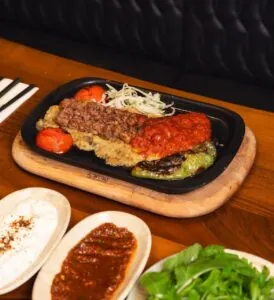
In Anatolian cuisine, it is common for the same ingredient to acquire an entirely different character through distinct cooking methods.
Aubergine is perhaps one of the finest examples of this.
When fried, it develops a different texture.
When baked, it becomes yet another.
When cooked alongside kebab, it takes on still another quality.
When roasted over embers, however, the aroma of the fire is directly imparted into the vegetable’s character.
Aubergine söğürme is one of the most unadorned examples of this transformation.
Consequently, describing söğürme merely as “charred aubergine” would leave some of the culinary knowledge behind the dish unexpressed.
The essential point is the fire’s ability to transform entirely the texture, aroma, and flavour of an ordinary vegetable.
Fire and Ember Culture in Anatolian Cuisine
In Anatolian cuisine, fire has never been merely a tool for cooking.
From meats slow-cooked in a tandır to kebabs turned on a spit, dough-based dishes prepared on a sac, and vegetables roasted over embers, numerous regional dishes have been shaped directly by the way fire is employed.
Roasting over embers is among its most distinctive methods.
The direct exposure of vegetables such as aubergine, pepper and tomato to the fire did not merely alter their textures; it also gave rise to the subtly smoky flavour still sought after at Anatolian tables today.
Söğürme is therefore not simply the story of aubergine.
In a sense, it is one of the traces left on the Anatolian table by the region’s learning to harness fire.
At Çakı Restoran, Söğürme Kebabı
One contemporary interpretation of this traditional pairing of embers and meat appears on Çakı Restoran’s main menu.
Söğürme Kebabı is highlighted on Çakı Restoran’s current menu as The Chef’s Choice and is listed at 880 TL.
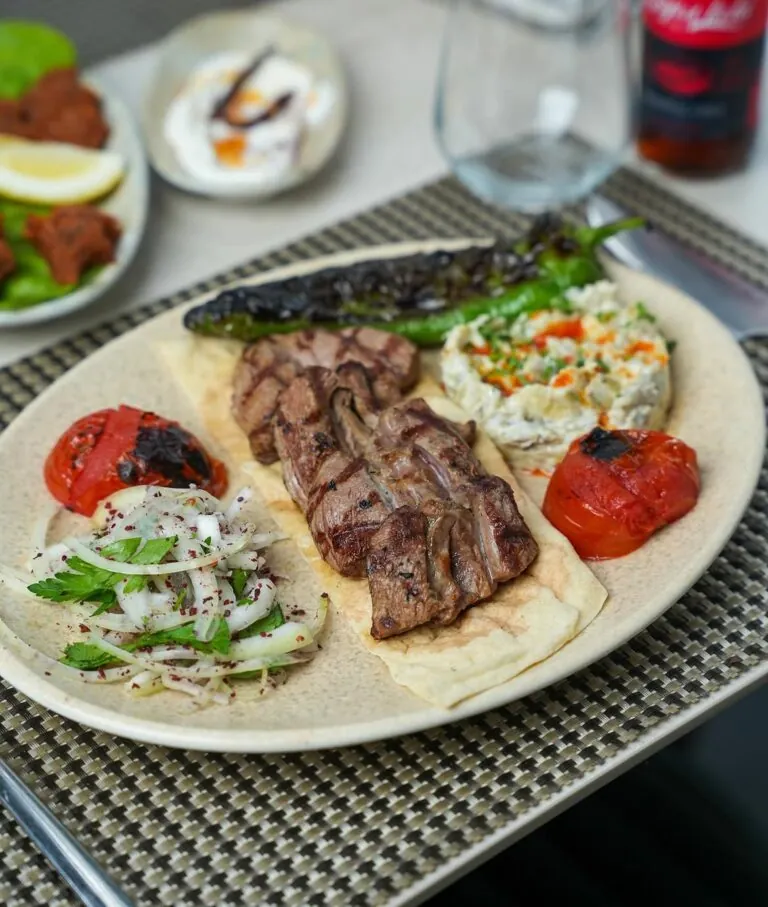
Also featured on the same main menu are dishes representing Anatolia’s diverse meat, ember and fire techniques, including Geleli Kebabı, Aubergine Kebap, Alinazik Kebab, Lamb Şiş and Lamb Tandır.
As the menu and prices may change over time, it is advisable to check the current menu before visiting.
Discovering Anatolian Cuisine through Its Cooking Techniques in Başakşehir
When assessing a restaurant’s approach to regional cuisine, it may not be sufficient to look only at the names of the dishes on the menu.
Sometimes, the real story lies in the cooking method itself.
In the prolonged heat of the tandır, the high temperature of the stone oven, the distance between the skewer and the coals, or the embers that darken the aubergine’s skin…
For those seeking Başakşehir Anatolian Cuisine and Başakşehir regional dishes, this technical diversity offers the opportunity to explore Anatolia’s varied table traditions within a single menu.
Çakı Restoran’s approach of “From breakfast to kebab in Başakşehir, the leading destination for Anatolian cuisine” also acquires meaning in this context.
The presence on the same menu of a dish in which the ember-roasting technique is prominent, such as Söğürme Kebabı, alongside a dish rooted in the tradition of long cooking, such as Kuzu Tandır, reminds us that Anatolian cuisine consists not only of recipes but also of cooking knowledge passed down from generation to generation.
For those wishing to gather with family at a carefully prepared table on Istanbul’s European Side, to introduce visitors from outside the city to distinctive regional flavours, or to experience the combination of embers and meat among Başakşehir regional dishes, Söğürme Kebabı represents one of the characterful options.
To encounter dishes from various regions of Anatolia at a warm and thoughtfully arranged table—particularly in the context of family meals and gatherings with guests—enhances the experience in a distinctive way.
This is because the story of söğürme does not, in fact, begin with aubergine.
It begins with fire.
Frequently Asked Questions
What is söğürme?
The term “söğürme” has various regional applications across Anatolia. In the cuisine of South-Eastern Anatolia in particular, it refers to a culinary technique involving roasting aubergines over an open flame, peeling their skins, and then chopping or mashing the flesh.
How is söğürme aubergine prepared?
Traditionally, aubergine is roasted over embers. Once the charred outer skin has been removed, the softened flesh is chopped or crushed with a knife, or pounded according to regional recipes. It may then be used on its own or alongside meat, yogurt, and other ingredients.
Are söğürme and közleme the same thing?
Not always. In some regional usages, “söğürme” denotes a preparation method specifically involving the roasting of aubergines. However, the term is also employed in different parts of Anatolia to describe other dishes.
Are “söğürme” and Alinazik the same dish?
No. In alinazik, grilled and finely chopped aubergine is combined with garlic yoghurt and completed with meat. Söğürme, by contrast, may be used to denote a broader concept relating to the grilling and preparation of aubergine.
Is Söğürme Kebabı the same as Geleli Kebabı?
No. Although both dishes may feature grilled aubergine, Geleli Kebabı is distinct in character, being a Malatya speciality that combines meat, aubergine, tomato and pepper.
Does Çakı Restoran offer Söğürme Kebabı?
Yes. Söğürme Kebab is included among the current main courses at Çakı Restoran and highlighted as a Chef’s Selection on the menu. Dishes and prices may change over time.