The Story of a Leaf’s Transformation into a Dish in Malatya
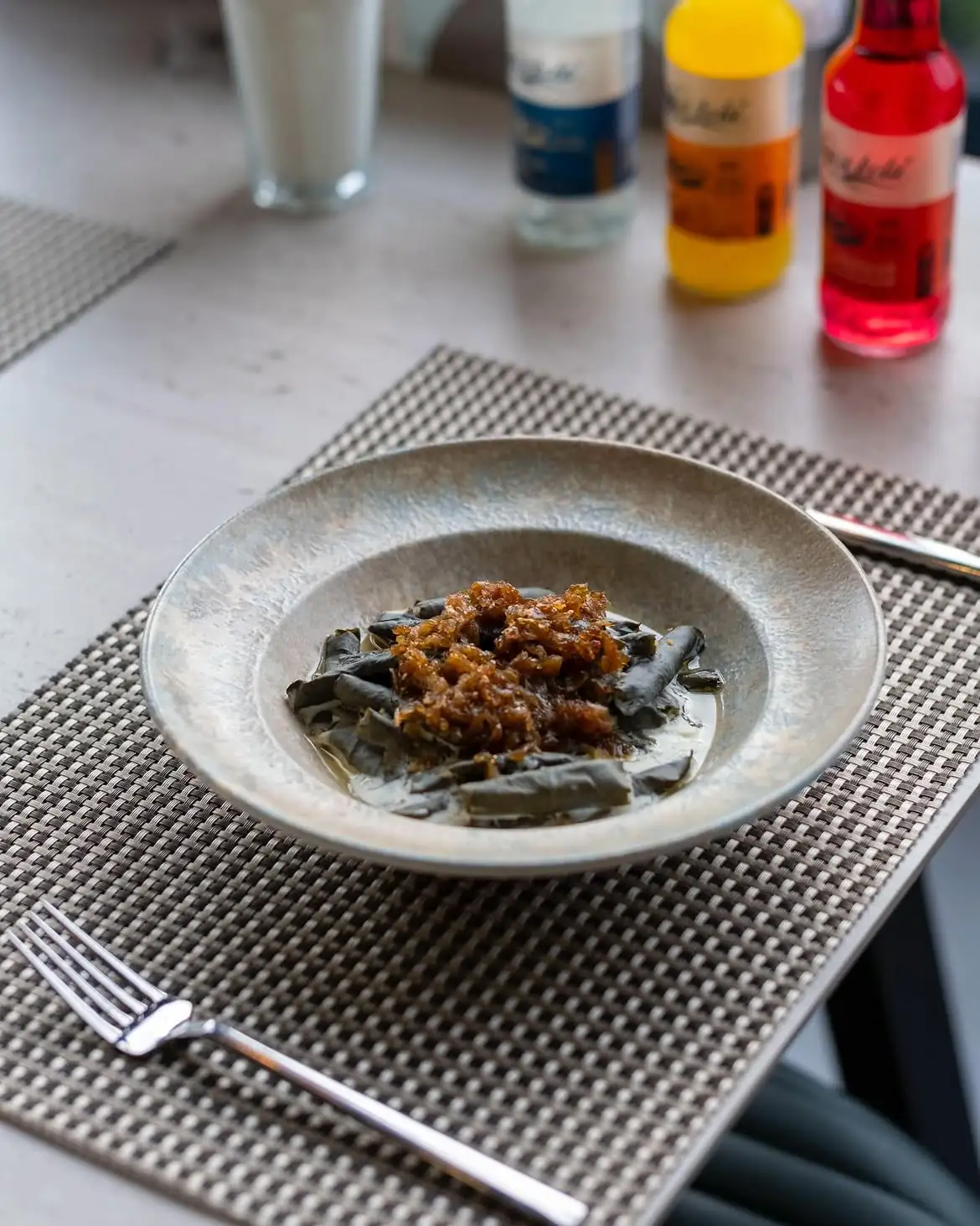
When yaprak sarma is mentioned, most of us first picture grape leaves. Malatya cuisine, however, offers a recipe that departs from this convention and beautifully illustrates Anatolia’s culture of making the most of its produce: Kiraz Yaprağı Sarması.
This dish, prepared by individually wrapping a bulgur filling in delicate cherry leaves and then serving it with a yoghurt-based, tangy sauce, illustrates how, in Malatya, an authentic table culture has emerged not only from the fruit of a tree but also from its leaves.
Moreover, this is not merely a regional recipe passed down from the past. Yeşilyurt Kiraz Yaprağı Sarma Köftesi has been officially registered as a geographical indication by the Turkish Patent and Trademark Office.
So what exactly is kiraz yaprağı sarması, why is it also known as “kiraz yaprağı köftesi”, and what makes it so distinctive in Malatya cuisine?
Kiraz Yaprağı Sarması – A Dish of Which Region?
Kiraz Yaprağı Sarması is one of the traditional dishes of Malatya, particularly associated with the Yeşilyurt district.
In the records of the Turkish Patent and Trademark Office, the dish is listed under the name “Yeşilyurt Cherry Leaf-Stuffed Bulgur Dumplings / Yeşilyurt Cherry Leaf Rolls”. The product was registered with a geographical indication in 2020.
The detail here is significant. The quality of the leaves to be used in the geographical indication registration has also been specified. The traditional recipe calls for the leaves of Malatya Dalbastı Cherries, another product bearing a geographical indication from Malatya.
Kiraz Yaprağı Sarması The transformation of an agricultural product from Malatya into a foundational ingredient for another regional dish stands as a fine example of the city’s culinary culture and its relationship with nature.
Why Is It Called “Kiraz Yaprağı Köftesi”?
For someone encountering the cuisine of Malatya for the first time, one of the most surprising nuances is the manner in which the term “köfte” is employed.
In Malatya, the term “köfte” does not always refer to meatballs prepared with minced meat.
The distinction is explicitly noted in the Malatya culinary records maintained by the Ministry of Culture and Tourism. In the region, the term “köfte” broadly encompasses dishes prepared primarily with bulgur, some of which are wrapped in vegetable or fruit leaves according to certain recipes.
Rolls made with cherry leaves belong firmly to this tradition.
For this reason, the terms kiraz yaprağı sarması and kiraz yaprağı köftesi represent two distinct applications within the same culinary tradition.
How Is Kiraz Yaprağı Sarması Prepared?
Although the dish appears quite simple, its preparation demands considerable manual skill.
In the traditional method registered with TÜRKPATENT, cherry leaves are first briefly steeped in hot water. The filling is based on natural cracked wheat from which the bran has not been removed.
After the wheat has been soaked in hot water, it is kneaded with flour and salt until it reaches a consistency suitable for wrapping.
Delicately Thin Rolls Require Skill
Cherry leaves are not as large as grape leaves. Consequently, the quantity of filling placed inside them is also quite small.
The registered recipe places particular emphasis on this point. If too much filling is used, the leaves may open both when wrapping and during cooking.
It is precisely here that skill reveals itself.
A quantity of bulgur filling smaller than a hazelnut is wrapped thinly within the leaves. To prevent them from opening, each wrap is held briefly between the fingers before being placed in the pot.
Behind each plate of Kiraz Yaprağı Sarması lies considerably more manual labour than one might expect.
A Balance of Flavour Accompanied by Yogurt, Plum Sauce and Butter
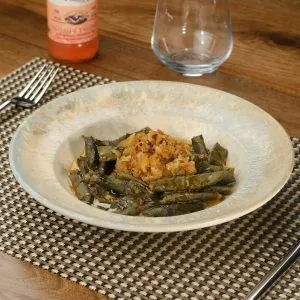
One of the most distinctive features that set Kiraz Yaprağı Sarması apart from traditional stuffed grape leaves is its method of service.
In the protected traditional recipe, a sauce is prepared using yogurt, flour, plum sauce and salt. The cooked parcels are then reintegrated into this sauce.
Finely chopped onions are subsequently sautéed in butter until they turn pale pink, after which the mixture is drizzled over the dish.
The result is a remarkably distinctive balance:
The cherry leaf’s distinctive aroma, the bulgur’s earthy character, the yoghurt’s refreshing tang, the plum’s tart sharpness, and the rich fragrance of onions sautéed in butter all converge on a single plate.
This is one of the recipes that demonstrates why Anatolian cuisine should be judged not merely by its ingredients but also by its ability to achieve balance.
In Malatya, a Culinary Culture in Which Even a Single Leaf Is Put to Use
To assess Kiraz Yaprağı Sarması in isolation would, in fact, fail to convey Malatya cuisine in its entirety.
According to records from the Ministry of Culture and Tourism, a wide variety of plants—including mulberry leaves, quince leaves, bean leaves, beet leaves, chard, and pumpkin flowers—were used in dishes in the region.
This diversity reflects one of Anatolia’s longstanding culinary traditions: making the most of seasonal produce.
Drying summer produce, boiling bulgur, preserving fruit for winter, and using various leaves in cooking are all elements of Malatya’s traditional culinary practices.
Kiraz Yaprağı Sarması is perhaps one of the most elegant examples of this culture.
Why Is Preserving Traditional Recipes Important?
In regional cuisine, a recipe does not merely specify which ingredients are used.
The identity of the recipe is also shaped by the choice of leaves, the method of their preservation, the quantity of filling employed, the delicacy with which the parcels are prepared, and the sauce with which they are served.
The fact that the geographical indication registration of Kiraz Yaprağı Sarması even mentions traditional methods—such as stringing the leaves to dry or preserving them in brine—is a fine illustration of this.
Should this information not be passed on, the dish may continue to be prepared under the same name, yet over time it may lose its distinctive character.
The significance of regional restaurants therefore lies not solely in placing traditional dishes on the menu; conveying the recipe’s story and its method of preparation to succeeding generations is likewise integral to the continuity of this culture.
A Table Reaching from Malatya to Istanbul
One of Istanbul’s most delightful gastronomic qualities is the opportunity to discover dishes from various Anatolian cities within the same city.
However, for someone seeking Başakşehir regional cuisine or Başakşehir Anatolian cuisine, the matter is not merely about finding an extensive menu of kebab varieties. Encountering dishes such as Kiraz Yaprağı Sarması, which maintain a strong connection to their place of origin, enables a deeper understanding of Anatolian cuisine.
For such a plate offers more than merely a distinctive flavour. It also carries Malatya’s bulgur culture, its habit of making the most of its produce, the handiwork of family kitchens, and the culinary knowledge passed down through generations to Istanbul.
Where to Eat Kiraz Yaprağı Sarması in Başakşehir?

This distinctive recipe from Malatya appears directly on Çakı Restoran’s current Malatya menu under the name Kiraz Yaprağı Sarması.
It is noteworthy that, alongside Kiraz Yaprağı Sarması, Çakı’s menu includes dishes that showcase the varied character of Malatya cuisine, such as Mahir Köfte, İçli Köfte Haşlama, Malatya-style Cheesy Bread, and Geleli Kebabı.
Thus, rather than sampling a single regional product, it becomes possible to experience together Malatya’s table culture—from bulgur to meat, from baked goods to stuffed leaves.
The current menu price for Kiraz Yaprağı Sarması on Çakı Restoran’s website is 430 TL. As menus and prices may change over time, it is advisable to check the current menu before visiting.
Keeping Anatolian Cuisine Alive in Istanbul
The migration of regional cuisine to a different city need not mean that the recipe’s story is lost.
On the contrary, when the right ingredients, proper techniques, and traditional recipe knowledge are preserved, a Malatya dish can introduce itself to new people hundreds of kilometres away.
Çakı Restoran’s approach—“From breakfast to kebab in Başakşehir, the leading destination for Anatolian cuisine”—acquires its full meaning here. By including lesser-known Malatya dishes such as Kiraz Yaprağı Sarması on the menu, the restaurant offers the opportunity to experience Anatolian cuisine not merely through a handful of familiar flavours, but through its regional diversity.
For those seeking to gather with family at a tranquil table on Istanbul’s European side, to offer visitors from outside the city a distinctive Turkish culinary experience, or to venture beyond the familiar and explore the world of Başakşehir regional dishes, such recipes lend an added sense of occasion to the table.
Kiraz Yaprağı Sarması is among its finest examples. Within a tiny cherry leaf lies not only bulgur, but also the culinary memory that Malatya has safeguarded for generations.
Frequently Asked Questions
Kiraz Yaprağı Sarması: from which region does this dish originate?
Kiraz Yaprağı Sarması is one of the traditional dishes of Malatya, particularly of the Yeşilyurt district. It holds a registered geographical indication under the name “Yeşilyurt Kiraz Yaprağı Sarma Köftesi / Yeşilyurt Kiraz Yaprağı Sarması”.
Are Kiraz Yaprağı Sarması and Kiraz Yaprağı Köftesi the same dish?
In local usage, both names may refer to the same dish. In Malatya cuisine, the term “köfte” encompasses not only meatballs but also dishes prepared with bulgur and sometimes wrapped in leaves.
What ingredients are found in Kiraz Yaprağı Sarması?
In the protected traditional recipe, the base of the filling is made from natural cracked wheat from which the bran has not been removed. The mixture is prepared with flour and salt; the wrapped leaves are served with sauces made from yogurt, plum sour, and onions sautéed in butter.
Can the leaves of every cherry tree be used?
In the traditional production of Yeşilyurt Kiraz Yaprağı Sarması, which is protected by a geographical indication, the leaves of the Malatya Dalbastı cherry must be used.
Is Kiraz Yaprağı Sarması available at Çakı Restoran?
Yes. Kiraz Yaprağı Sarması is featured on Çakı Restoran’s Malatya menu. Access to the current menu is available on the restaurant’s website.