
The Tradition of Slow Cooking over an Open Fire in Anatolia
To understand some dishes, one must look at their ingredients; to understand others, one must consider the place where they are cooked.
The tandır is precisely such a culinary tradition.
Today, when the word “tandır” is mentioned, most of us think of slow-cooked lamb that falls apart into tender shreds. Yet tandır is not merely the name of a dish. In different regions of Anatolia, it refers to an ancient cooking apparatus used to prepare a wide range of foods, from bread and meat to pastries and various pot dishes.
The fire lit inside the tandır, which is set into the earth or ground, gradually turns into embers. The intense heat that accumulates within the tandır’s walls continues to cook the food without direct contact with the flames.
Consequently, the history of the tandır is not only the story of a meat dish but also the tale of humanity learning to control fire for long, even cooking.
So what is a tandır, how did Anatolia’s tandır culture develop, and why does lamb, after hours of cooking, eventually separate almost effortlessly into its natural fibres?
What Is a Tandır?
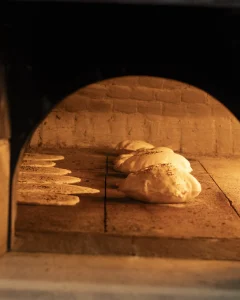
A tandır is a specialised cooking oven traditionally constructed from earth, clay or other heat-resistant materials, into which a fire is lit.
Its construction varies from one region to another.
Some tandırs are built into the ground.
Others are raised above the surface.
While some are primarily used for baking bread, in certain regions meat dishes have become central to tandır culture.
The common feature is that the fire burns not merely beneath the food but heats the entire body of the tandır.
Consequently, the heat accumulated within the tandır’s walls continues to cook the food even after the fire has reduced to embers.
A Tandır Is Not a Dish but a Cooking System
Today, as the phrase “Lamb Tandır” frequently appears on restaurant menus, one might assume that tandır refers to a specific dish.
In fact, tandır is a much broader concept.
Across different regions of Anatolia, tandırs have been used to prepare:
bread,
lavash,
çörek bread,
kete,
meat,
kebab
and various regional dishes have been prepared.
In the rural culinary traditions of Eastern and Central Anatolia, in particular, the tandır has never been merely a cooking vessel; it has also been an integral part of domestic life and winter preparations.
Therefore, Anatolian tandır culture bears the traces of a way of life that extends far beyond the kitchen.
How Far Back Does the History of the Tandır Extend?
The history of tandır-like earthen ovens in Anatolia stretches back to very ancient times.
Archaeological and cultural research shows that this type of cooking arrangement was used throughout long periods in the history of Anatolia.
The ability of earth and clay to retain heat for an extended period has made it possible to use the temperature in a controlled manner even after the fire has been lit.
In today's modern ovens, it is possible to adjust the temperature with a single button.
In old kitchens, however, mastery involved being able to read the intensity of the fire, the type of wood, the state of the embers, and the temperature of the tandır.
Therefore, the tandır is not merely an old piece of kitchen equipment, but also a cooking knowledge passed down from generation to generation.
How Does an Earth Tandır Work?
The operating principle of the traditional tandır is surprisingly impressive.
First, a fire is lit inside the tandır.
As the wood burns, the inner surface of the tandır heats up.
Over time, the fire turns into embers.
However, the cooking does not end here.
The intense heat stored in clay or earthen walls remains within the tandır.
When the meat is hung inside the tandır oven or placed in the appropriate manner, it is cooked not only by the embers beneath but also by the surrounding heat.
This distinguishes tandır from quick-cooking methods that involve direct exposure to fire.
What Is the Difference Between Tandır and Grilling?
On the grill, the relationship between the meat and the heat source is more direct.
In products such as lamb shish or chops, the meat is exposed to high heat, and a browned layer quickly forms on its surface.
With a tandır, however, the purpose is entirely different.
Here, it's not speed that matters, but time.
Larger cuts of meat require a longer cooking time for their interiors to soften and for the connective tissues to break down.
Therefore, the meat used in a tandır is cooked in a controlled manner rather than being quickly fried.
Ultimately, instead of the charred and firmer meat texture found on the grill, a softer consistency that comes apart more easily emerges when cooked in a tandır.
Why Does Tandır Lamb Become So Tender?

One of the most striking features of a well-prepared kuzu tandır is how tender the meat becomes, requiring almost no knife to cut.
The reason for this is not merely that the meat is kept warm for a long time.
When particularly large and connective-tissue-rich cuts of lamb are cooked for an extended period at a controlled temperature, their firm textures gradually begin to soften over time.
The collagen structures within the meat break down, transforming into a gelatinous texture.
As this process progresses, the structure that binds the muscle fibres together weakens.
In the end, the meat begins to come apart easily.
The tandır’s renowned “shredding” texture arises precisely from this process.
Does Long Cooking Always Yield Good Results?
No.
Long cooking and the right long cooking are not the same thing.
If meat is kept at a high temperature for longer than necessary, it can lose its moisture and become dry instead of tender.
The true skill of a tandır lies in striking the right balance between time and temperature.
Therefore, mastery in tandır cooking cannot be measured solely by the question “how many hours was it cooked for?”.
The way it is cooked is just as important as the duration.
Why Is Lamb So Frequently Used in the Tandır?
When considering Anatolia's livestock culture, lamb and mutton are among the essential components of its traditional cuisine.
The tandır has developed a strong association with lamb, particularly because it is well-suited to the slow cooking of large cuts of meat.
The lamb's own fat slowly permeating the meat during cooking creates a rich yet balanced aroma after prolonged cooking.
Therefore, the ingredient list in tandır recipes is often surprisingly simple.
Good meat.
The right heat.
Sufficient time.
Sometimes, the most powerful result in the kitchen comes from the shortest list of ingredients.
Is the Tandır the Same Across Different Regions of Anatolia?
No.
Although the fundamental concept of tandır is shared, its methods of preparation vary from region to region across Anatolia.
These variations make tandır culture particularly intriguing.
Denizli’s Well Tandır
Denizli’s traditional Well Tandır is among the most impressive examples of the tandır.
A fire is lit in a well prepared to a depth of approximately one and a half metres, and once the wood has turned to embers, lambs are lowered into the well using hooks.
When the well is covered and its surroundings sealed, an intense cooking environment forms within.
The meat does not rest directly over the fire.
The embers, the hot tandır walls, and the enclosed space work together.
This method clearly demonstrates that the tandır is not merely about “leaving meat over low heat”.
Tandır Kebab from Yozgat
In Yozgat Tandır Kebab, lamb threaded onto skewers is cooked in specially designed tandır ovens.
Here, too, the local livestock culture and cooking technique come together.
The same tandır concept takes on a different application in another region.
The Tandır and Bread Culture of Eastern Anatolia
In rural life around Erzurum and its surrounding areas, the tandır is not merely a place for cooking meat.
Tandır bread, tandır rolls, kete and various other baked goods are prepared around the same fire.
Therefore, to understand the tandır's place in Anatolian cuisine solely through the history of kebabs would be incomplete.
Tandır is also the story of bread.
The Table Culture Established Around the Tandır
In ancient Anatolian homes, food preparation was not as individualised an activity as it is today.
Kneading the dough, lighting the tandır, preparing the breads, and planning dishes that would cook for a long time often meant a shared preparation within the family.
In some regions, particularly when making bread, it was possible to produce enough in a single batch to last for days or even weeks.
Around the tandır, it wasn't just food that was shaped, but social life as well.
Therefore, in Anatolian culinary culture, the tandır is not merely a physical stove.
It is a centre that represents the warmth of home, effort, and sharing.
Why Is Meat Suspended in a Well Tandır?
In some tandır methods, instead of placing the meat directly on the base of the tandır, it is hung using hooks.
One of the important reasons for this is to prevent the meat from coming into direct contact with the fire.
As the intense heat inside the tandır envelops the meat, it continues to cook slowly in its own fat.
In examples of well tandırs, it is also observed that fat and water draining from the meat collect in the vessels placed below.
This allows for the development of a distinct environment within the tandır, where not only dry heat but also the moisture generated during cooking plays a role.
This is one of the key details that determine the texture of the dish.
Is Slow Cooking in a Tandır the Same as in an Oven?
A traditional earthen tandır and a modern restaurant oven are not, technically speaking, the same piece of equipment.
Nevertheless, in contemporary restaurant kitchens, the fundamental principle of the old tandır can be reinterpreted through modern methods.
What matters here is the principle:
controlled heat rather than rapid searing over high flame,
prolonged cooking,
preserving as much as possible of the meat’s own juices and fat,
and achieving the desired tender texture.
Modern equipment enables chefs to control temperature with greater precision.
In a traditional tandır, the chef’s skill in reading the fire is supported in a modern kitchen by thermostats and controlled oven systems.
Yet, for a successful outcome, it is still necessary to understand the structure of the meat.
How Does the Tandır Tradition Endure in the Contemporary Restaurant Kitchen?
In modern city life, it is certainly not feasible to construct a large earthen tandır in the garden of every restaurant.
However, the fundamental principle of the tandır culture continues to endure.
Long cooking.
Controlled temperature.
The meat should not be rushed.
To soften with its own flavour.
Contemporary chefs may use modern ovens and various heavy-duty cooking equipment in their interpretations of tandır.
This demonstrates that traditional methods and modern cuisine need not be opposites of one another.
The technique may vary.
However, the idea behind the dish can be preserved.
Why Does Lamb Tandır Remain So Beloved Today?
Modern cuisine is constantly evolving.
New techniques, varied presentations and emerging culinary trends continue to appear.
Nevertheless, dishes rooted in such ancient cooking traditions as lamb tandır continue to hold their place at the table.
One of the reasons for this is undoubtedly its texture.
The tender texture of the long-cooked meat, its rich lamb flavour, and its simple presentation stand the test of time.
Another reason is the sense of familiarity that the tandır evokes in people.
In many parts of Anatolia, the tandır is associated with the kitchens of elders, large communal tables, and special occasions.
Some dishes are loved not just by the palate, but by memory as well.
Tandır is a bit like that kind of dish.
Tandır Lamb at Çakı Restoran

One of the contemporary interpretations of this traditional Anatolian slow-cooking method can be found on the main menu at Çakı Restoran.
Çakı Restoran describes Lamb Tandırı as a main course that is prepared by slowly roasting lamb in an oven for an extended period, resulting in a tender texture that highlights the natural flavours of the meat.
The restaurant's current online menu lists it as Lamb Tandoor 990 TL.
The presence, within the same main-course section, of options representing different fire-and-meat techniques—such as Lamb Şiş, Lamb Chops, Lamb Shank, Eggplant Kebab, and Söğürme Kebab—also makes it possible to compare the tandır with other cooking methods at the same table.
As menus and prices may change over time, it is advisable to check the current menu before visiting.
Experiencing Anatolian Tandır Culture in Başakşehir
For those seeking Başakşehir Anatolian cuisine or Başakşehir regional dishes, what matters is not merely seeing traditional dish names on a menu.
The idea behind the cooking of those dishes should also be palpable.
Tandır is one of the finest examples of this.
On one side, there are skewers cooking over the embers in a matter of minutes, while on the other, there is lamb that slowly tenderises over several hours.
The raw material for both is meat.
However, the two dishes that emerged are completely different from each other.
It is this variety of techniques that enriches Anatolian cuisine.
Anatolia’s Slow-Cooking Tradition in Başakşehir
It would be a mistake to judge Çakı Restaurant’s “From breakfast to kebab in Başakşehir, the leading destination for Anatolian cuisine” approach solely on the basis of its menu variety.
From dishes featuring grilled aubergine to stone-oven preparations, from skewers to slow-cooked Lamb Tandır, the coexistence of diverse cooking techniques within a single menu brings together the varied facets of Anatolian cuisine at one table.
For those wishing to gather with family at a thoughtfully laid table on Istanbul’s European Side, to introduce visitors from outside the city to regional Turkish cuisine, or to experience one of the most compelling examples of the long-standing tradition of slow cooking among Başakşehir regional dishes, the Lamb Tandır offers a distinctive choice.
Being able to encounter modern adaptations of traditional dishes within a warm and welcoming restaurant atmosphere also facilitates the meeting of this ancient culinary culture with newer generations.
For the story of the tandır is not merely about lamb being cooked for hours.
It is the story of humankind learning to kindle fire and to exercise patience in its presence.
Frequently Asked Questions
What is a tandır?
A tandır is a type of stove traditionally constructed from earth, clay, or heat-resistant materials, in which a fire is lit to cook food and bake bread. Its structure and method of use may vary across different regions of Anatolia.
How far back does the history of the tandır extend?
It is known that tandır-like earthenware cooking arrangements have been used in Anatolia since very ancient times. Archaeological and cultural studies demonstrate that the tandır has long been a widespread cooking vessel in Anatolian history.
Why is lamb tandır so tender?
When lamb is cooked over a prolonged period at a controlled temperature, the collagen in its connective tissues gradually dissolves, softening the structures that bind the muscle fibres together. Consequently, properly cooked tandır meat readily separates into its fibres.
How many hours does tandır meat take to cook?
It is not accurate to give a single duration. The cooking time may vary according to the cut and size of the meat, the temperature of the tandır or oven used, and the regional method. The defining characteristic of the tandır is not speed, but controlled, prolonged cooking.
Are tandır and kuyu kebab the same thing?
Well kebab is one of the regional applications of tandır culture. However, not all tandır dishes are well kebab. Different tandır structures and cooking methods can be found across various regions of Anatolia.
Is tandır used solely for cooking meat?
No. In different regions of Anatolia, the tandır has also been used to prepare bread, lavash, çörek, kete, and a variety of regional dishes.
Is slow cooking in a traditional tandır the same as in a modern oven?
Technically, they are not the same. A traditional tandır possesses a distinctive earthen or clay construction and a specific fire arrangement. In modern restaurant kitchens, the principle of prolonged, controlled cooking can be applied using ovens and other equipment.
Is Lamb Tandır available at Çakı Restoran?
Yes. Kuzu Tandır is included among the current main courses at Çakı Restoran. The restaurant describes it as lamb slow-cooked in the oven. It is listed on the current online menu.