
A Sweet Story from Ottoman Cuisine to Contemporary Anatolian Tables
When Turkish cuisine’s desserts are mentioned, baklava, kadayıf or syrup-soaked pastries may first come to mind. Yet within Anatolia’s culinary memory of sweetness, far simpler recipes prepared with milk, flour, butter and patience also hold a significant place.
Süt helvası is one of them.
At first glance resembling muhallebi, its soft texture, the lightly browned surface that separates as soon as a spoon touches it, and the warm aroma of flour toasted in butter give süt helvası a character quite distinct from the classic helvas we know.
Moreover, its story is not merely one of a few ingredients being combined. The deep-rooted helva tradition of Turkish cuisine, Bursa’s local table culture, and the technique of browning the surface in an oven all converge in this single sweet.
So what is süt helvası, and from which region does this dessert originate? What features distinguish it from helva made with flour or semolina?
What Is Süt Helvası?
Süt helvası is a traditional milk-based dessert prepared primarily with milk, flour, butter and sugar. After being cooked on the stove, it is placed in an oven to brown its surface.
Its texture is not grainy or firm, as in classic flour helva.
It is softer, more fluid and structured so that it can be eaten with a spoon.
Because of this characteristic, it would not be correct to define süt helvası (milk dessert) merely as “un helvası (flour halva) with milk added”.
The character of the dish is formed in three separate stages:
First, the flour is roasted in oil.
Then, the milk is added to create the desired consistency.
Finally, the dessert goes into the oven to brown on top.
This final stage is one of the most distinctive features that set süt helvası (milk dessert) apart from many other milk-based desserts.
From which region does süt helvası originate?
Süt helvası (milk dessert) is a dessert that has become particularly associated with Bursa cuisine today.
Bursa süt helvası (milk dessert) is among the traditional products registered with a geographical indication by the Turkish Patent and Trademark Office.
In Bursa’s traditional cuisine, süt helvası (milk dessert) is regarded not merely as a dessert found in restaurants, but also as one of the local recipes that the city has cherished for many years.
This is why, today, süt helvası can be found at so many tables—from Bursa’s tradesmen’s eateries to establishments representing traditional cuisine.
However, to understand the story of milk halva, one must first look at the broader halva culture within Turkish cuisine.
Where Does the Helva Culture in Turkish Cuisine Originate?
Helva is not merely a dessert consumed at the end of a meal in Turkish cuisine.
For centuries, helva has been prepared on occasions such as births, weddings, festivals, send-offs for soldiers, religious observances, funerals, and various social gatherings.
Helva therefore has a broader cultural significance than many other desserts.
On one side, there is joy.
Sharing on one side.
Sometimes to remember.
Sometimes, too, it serves to complete a lavish table.
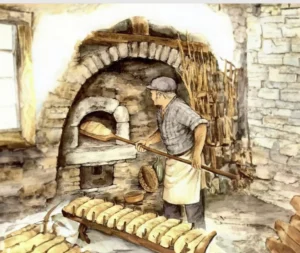
It is known that helva has been part of Turkish culinary culture since the Seljuk period, and that various types of helva were specially prepared in the Ottoman palace kitchens.
The Helvahane in Ottoman Cuisine
One of the most important centres for dessert production in the Ottoman palace kitchen was the Helvahane.
Here, they made not only helvas but also jams, syrups, pastes, and various other sweet preparations.
In Ottoman cuisine, numerous varieties of helva were prepared using a wide range of ingredients such as flour, starch, rice flour, clarified butter, sugar, honey, molasses, almonds, pistachios, rose water, and milk.
Therefore, to understand today’s milk halva, it is more accurate to read it as a continuation of this broader sweet tradition rather than evaluating it in isolation.
However, an important distinction needs to be made.
There is insufficient historical evidence to state definitively that süt helvası (milk dessert) emerged in a specific year or within a particular palace kitchen.
Therefore, rather than making definitive statements such as “süt helvası (milk dessert) was invented on this date”, it is more accurate to say that within the helva and milk-based dessert culture, which has been carried down from the Ottoman period to the present day, it acquired a strong local identity in Bursa.
What Sets Bursa Süt Helvası (Milk Dessert) Apart from Other Halvas?
When helva is mentioned, two main varieties come to mind for most people:
Wheat flour halva and semolina halva.
The roasting process is extremely important in both of them.
In süt helvası (milk dessert), flour is also roasted in fat, but the resulting texture is quite different.
In this recipe, milk plays a much more defining role.
How It Differs from Flour Helva
The goal with classic flour helva is to achieve a denser consistency that can be gathered together and is often shaped using a spoon or a mould.
In süt helvası (milk dessert), however, the dessert remains more fluid.
Milk is not merely a component of the syrup; it is one of the dessert's defining characteristics.
How It Differs from Semolina Helva
In semolina halva, the semolina's distinctive grainy texture can be felt.
In milk halva, flour is used, resulting in a smoother texture.
The result occupies a unique position between helva and a milky dessert.
How It Differs from Muhallebi
Although its appearance may resemble muhallebi, the preparation technique is different.
In süt helvası (milk dessert), roasting the flour in butter or oil creates a distinctive aroma.
Subsequently, browning the surface in the oven imparts a second layer of flavour, quite distinct from that of a custard.
Why Does the Flavour of Süt Helvası Begin with Roasting the Flour?
The ingredient list for süt helvası is remarkably simple.
Consequently, minor technical details become considerably more important.
Ensuring that the flour is sufficiently roasted in the fat is paramount among these.
During roasting, the raw smell of the flour disappears, and faintly nutty, warm aromas begin to develop.
Yet balance remains essential at this stage.
If the flour is not roasted sufficiently, a raw-flour taste may be perceptible in the dessert.
If it is over-roasted, however, both colour and aroma may become excessively heavy.
To preserve the light, refined character of süt helvası, the roasting stage must be carried out with care.
When Is the Milk Added?
When hot milk is added to the mixture of roasted flour and fat, the second stage of the dessert begins.
As the mixture is continuously stirred, the flour and milk begin to thicken and the consistency starts to become denser.
The result is a texture akin to muhallebi, yet with a more pronounced aroma of toasted flour and butter.
At this stage, it is important to achieve the correct consistency.
Because there is still one more cooking stage before the dessert.
Oven.
Why Is the Surface of Süt Helvası Browned in the Oven?
Perhaps the most characteristic feature of süt helvası (milk dessert) is the golden-brown crust that forms over its pale, soft surface.
This is not merely a visual detail.
When exposed to high heat in the oven, the components from the milk, sugar, and fat on the surface develop new aromas.
While the inner part of the dessert remains soft and creamy, the top layer becomes denser and acquires a toasted character.
This contrast is one of the most beloved features of süt helvası (milk dessert).
The spoon first breaks through the lightly toasted surface.
Beneath it lies the warm, soft milk pudding.
Two distinct textures and aromas come together in the same spoonful.
Why Is the Baked Surface Important?
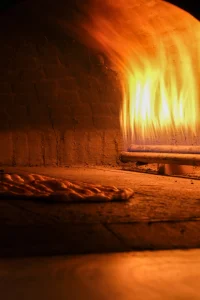
Even though it is possible to prepare and serve süt helvası (milk dessert) only on the stove, the result will not be the same dessert.
Because baking is the stage that completes the character of the recipe.
The milky mixture, prepared according to Bursa’s traditional recipe, is transferred to a tray and baked in the oven until its surface turns golden brown.
The browned surface is therefore part of the traditional recipe itself, rather than simply a feature of modern restaurant presentation.
Is Süt Helvası Eaten Warm or Cold?
One of the most enjoyable features of milk halva is that it can be served hot or warm.
In traditional recipes from Bursa, it is common to serve the dish hot straight from the oven.
In this serving style, the aromas of butter and toasted flour are more pronounced.
While the surface remains warm, it retains its lightly toasted character; the lower portion, by contrast, stays soft and fluid.
For this reason, süt helvası (milk dessert) occupies a distinctive place among desserts served hot, particularly after a lengthy evening meal.
The Warm Post-Meal Sweet Tradition in Turkish Cuisine
On an Anatolian table, dessert is not merely the final course to satisfy a craving for sweetness.
It marks the conclusion of an extended meal.
After meat dishes, kebabs and other hearty main courses, moving to a dessert with a different texture alters the rhythm of the meal.
While syrup-soaked desserts such as baklava offer a bold and intense finish, süt helvası provides a gentler transition.
Thanks to its milky texture, service while warm, and notably unheavy consistency, it is particularly well suited to follow a generously varied spread.
This is one of the factors that explains why süt helvası finds a ready place on restaurant menus dominated by kebabs and meat dishes.
Why Is Simplicity an Advantage in Süt Helvası?

Contemporary desserts often feature a wide range of ingredients, sauces and embellishments.
The power of milk halva, however, is precisely the opposite.
Milk.
Flour.
Oil.
Sugar.
The basic recipe is this simple.
Consequently, the quality of the ingredients used and the culinary technique become more pronounced.
When fine milk, properly toasted flour and high-quality butter are used, a dessert of character can emerge without the need for additional flavours.
When served with walnuts or different nuts, these become elements that complement the texture rather than overpowering the dessert.
A Sweetness That Traveled from Bursa to Anatolian Tables
The strong association of süt helvası (milk dessert) with Bursa does not mean that the dessert is confined solely within the borders of Bursa.
One of the finest aspects of local cuisines is the way recipes can travel from one city to another.
Dishes that were once more commonly found in homes or artisan eateries in a particular region can now be discovered by new guests in restaurants across different cities in Turkey.
In this way, the recipe retains its own geographical identity while becoming part of a broader table.
The presence of süt helvası (milk dessert) in Istanbul restaurants that offer Anatolian cuisine is also a continuation of this journey.
Why Are Traditional Desserts Regaining Popularity?
The presence of new-generation desserts and international confectionery products on restaurant menus is steadily growing.
Nevertheless, interest in traditional desserts such as süt helvası (milk dessert), pumpkin dessert, baklava, höşmerim and similar treats continues.
One of the key reasons for this is familiarity.
For many people, these desserts are more than mere confections; they are dishes that evoke memories of family tables and traditional kitchens.
Another reason is the growing curiosity towards regional cuisine.
People nowadays no longer wish merely to eat; they also want to know where the food they consume comes from and why it is prepared in that particular way.
At this precise moment, süt helvası (milk dessert) also transforms into a dessert with its own story.
At Çakı Restoran, Süt Helvası
This traditional dessert, which has become synonymous with Bursa, is also featured on Çakı Restoran’s contemporary dessert menu.
Çakı Restoran presents süt helvası (milk dessert) as a traditional sweet, distinguished by its soft texture and delicate sweetness.
The current online menu lists süt helvası (milk dessert) at 250 TL.
The dessert menu also features a variety of options such as Kabak Tatlısı (pumpkin dessert), Havuç Dilimli Baklava (wedge-cut baklava), Çakı Fıstıklı, San Sebastian, and Maraş Kesme Dondurma (Maraş-style sliced ice cream), bringing together traditional Anatolian sweets with more contemporary dessert interpretations within the same menu.
As menus and prices may change over time, it is advisable to check the current menu before visiting.
The Place of Süt Helvası at Group Tables
Süt helvası (milk dessert) is not available solely on the individual dessert menu at Çakı Restoran.
Some of the restaurant's group menus also feature Süt Helvası as a sweet conclusion to the meal.
This actually complements the character of the dessert quite well.
Following an extended group meal, a kebab spread, or a corporate gathering, it offers a familiar yet distinct alternative to classic syrup-soaked desserts.
Its soft texture, which can be enjoyed warm or at room temperature, also provides a soothing conclusion to a large shared meal.
Discovering Anatolian Dessert Culture in Başakşehir
Başakşehir Anatolian Cuisine or for those searching for Başakşehir regional dishes, the Anatolian culinary experience does not end when the main course is finished.
After all, one of the ways to understand a region's culinary culture is to look at its desserts.
Just as the dough and meat traditions of Kayseri, the bulgur dishes of Malatya, and Anatolia’s kebab culture hold considerable importance, so too are milky and syrup-soaked desserts a natural continuation of the same table.
In this respect, süt helvası (milk dessert) occupies a distinct place on the menu.
At the close of an evening that begins with kebab, moving to a warm dessert made with milk, flour, and butter offers the opportunity to experience the diverse facets of the Anatolian table within a single meal.
In Başakşehir, an Anatolian Spread from Breakfast to Dessert
Çakı Restoran’s “From breakfast to kebab in Başakşehir, the leading destination for Anatolian cuisine” approach should not be interpreted solely through the variety of its main dishes.
An Anatolian table may begin with breakfast, continue with regional starters, grow hearty with tandır or kebab, and conclude with a traditional dessert such as Süt Helvası.
For those wishing to gather with family at a thoughtfully laid table on Istanbul’s European Side, to show guests from outside the city that Turkish cuisine is not confined to kebab, or to discover traditional desserts among Başakşehir regional dishes, such menu diversity renders the meal more cohesive.
Experiencing modern urban interpretations of traditional recipes in an elegant yet warm setting also serves as a reminder that Anatolian cuisine remains a living culture.
For sometimes, the last flavour that lingers in the memory of a meal is not the most ostentatious one.
A freshly baked, golden spoonful of hot süt helvası (milk dessert) can leave precisely the same impression.
Frequently Asked Questions
What is süt helvası?
Süt helvası is a traditional milk dessert prepared primarily from milk, flour, butter or oil, and sugar. After being thickened on the stove, its surface is browned in the oven.
From which region does süt helvası originate?
Süt helvası is particularly associated with the cuisine of Bursa. Bursa Süt Helvası is a traditional product of Bursa, protected by a geographical indication.
Does Bursa Süt Helvası have a geographical indication?
Yes. Bursa Süt Helvası was registered as a geographical indication under registration number 912 on 4 October 2021.
Is süt helvası an Ottoman dessert?
Süt helvası (milk dessert) is noted in Bursa’s gastronomic sources as one of the flavours carried forward from the Ottoman period to the present day. The culture of helva in Turkish cuisine has deep roots extending back to a time before the Ottomans. Nevertheless, it is not accurate to state definitively that süt helvası emerged in a specific year or within a particular palace kitchen.
Is süt helvası the same as un helvası?
No. Although both may contain flour and fat, süt helvası has a high milk content and a more fluid, milky consistency. Furthermore, süt helvası is placed in an oven to brown its surface.
Is süt helvası the same as muhallebi?
No. In süt helvası, the flour is first toasted in fat, and the dessert is browned in an oven during the final stage. These two processes impart a flavour and texture distinct from muhallebi.
Is süt helvası eaten hot?
In the traditional Bursa recipe, süt helvası is served hot after its surface has been browned in the oven. In restaurant and home preparations, it may also be served warm.
Why does the surface of süt helvası brown?
After the dessert has reached the correct consistency on the stove, it is placed in an oven. The high oven temperature creates a browned, more intensely flavoured layer on the surface, while the lower portion remains soft.
Is Süt Helvası available at Çakı Restoran?
Yes. Süt Helvası is included in Çakı Restoran’s current dessert menu. It is listed on the up-to-date online menu. The menu and prices may change over time.