At Malatya’s Table A Distinctive Take on Köfte
When köfte is mentioned, most of us picture a familiar dish made from minced meat, spices, and the flames of a grill.
Yet, upon arriving in Malatya, the meaning of the word “köfte” begins to expand.
Bulgur is kneaded, sometimes combined with meat, at times wrapped in a leaf, occasionally boiled, and sometimes placed in the same pot as vegetables. On a Malatya table, köfte is not merely a dish made by shaping minced meat; it constitutes a broad culinary tradition in its own right.
And Mahir Köfte is one of the intriguing names within this rich köfte culture.
This dish, whose name many hear for the first time, naturally raises the question “What is Mahir Köfte?” while also offering an excellent starting point for discovering just how diverse the understanding of köfte is in Malatya cuisine.
Why Can We Not Speak of a Single Dish When Köfte Is Mentioned in Malatya?
One way to understand Malatya cuisine is to look at its use of bulgur.
As is particularly noted in the Malatya cuisine records of the Ministry of Culture and Tourism, the term “köfte” in the region does not refer solely to the classic meat-based meatballs. A wide variety of dishes, predominantly based on bulgur and sometimes prepared with meat, vegetables, or different types of leaves, are considered part of this broader köfte family.
Consequently, there is a surprisingly wide variety of Malatya regional meatball types.
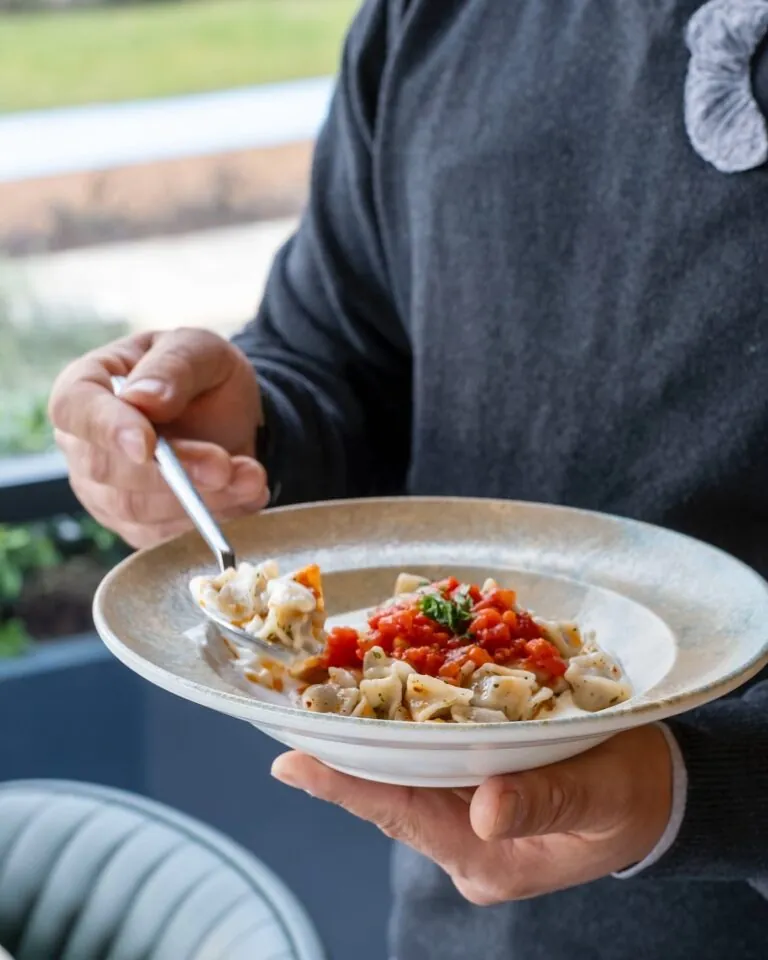
Analı kızlı, a dish combining large stuffed dumplings with small bulgur dumplings, is one example.
Sıkma köfte is another example.
Pumpkin meatballs, tangy meatballs, lentil çiğ köfte, and potato çiğ köfte, on the other hand, demonstrate entirely distinct facets of the same culinary tradition.
The fact that such vastly different dishes can be found under the same “köfte” heading is one of the most characteristic features of Malatya cuisine.
At the Heart of Malatya’s Köfte Culture: Bulgur
Bulgur is one of the oldest and most versatile products of Anatolian cuisine.
Bulgur, which is produced by boiling, drying, and grinding wheat, has become a staple ingredient in the daily cuisine of many regions of Anatolia, owing to its long shelf life and availability in various coarsenesses.
In Malatya, however, the uses of bulgur are particularly extensive.
From fine to medium bulgur, as well as cracked wheat and other bulgur varieties known by different names in the region, various products are used in köfte, pilav and pot dishes.
Even in the geographical indication specification for Malatya Simit Pilavı, it appears that the fine bulgur used for meatballs is known locally by various names such as “simit, sümüd, sümüt or simid”.
This rich terminology alone is enough to illustrate just how deeply rooted wheat and bulgur are in the cuisine of Malatya.
Why Are Bulgur and Meat So Often Used Together?
In many traditional Malatya meatball recipes, bulgur and meat go hand in hand.
For example, in the outer shell of Analı Kızlı Köfte, bulgur and lean minced meat are used together. In the inner part, however, fattier minced meat, onion and butter come into play.
The geographical indication recipe for Polat İçli Köftesi also shows that medium-grain Malatya bulgur and minced beef are kneaded together in the same outer shell.
The reason for this is not merely to prepare an economical or satisfying meal.
Bulgur gives the meat a different texture.
Meat adds flavour to the bulgur.
The kneading process, on the other hand, takes the two ingredients out of their individually perceptible forms and transforms them into a single meatball texture.
For this reason, the mastery of köfte in Malatya cuisine is often concerned less with the list of ingredients and more with the skill of kneading and achieving the right consistency.
Mahir Köfte – What Is It?
Mahir Köfte is one of the regional köfte names associated with Malatya cuisine, though today it may appear in various interpretations and presentations.
It is important to distinguish a key point here.
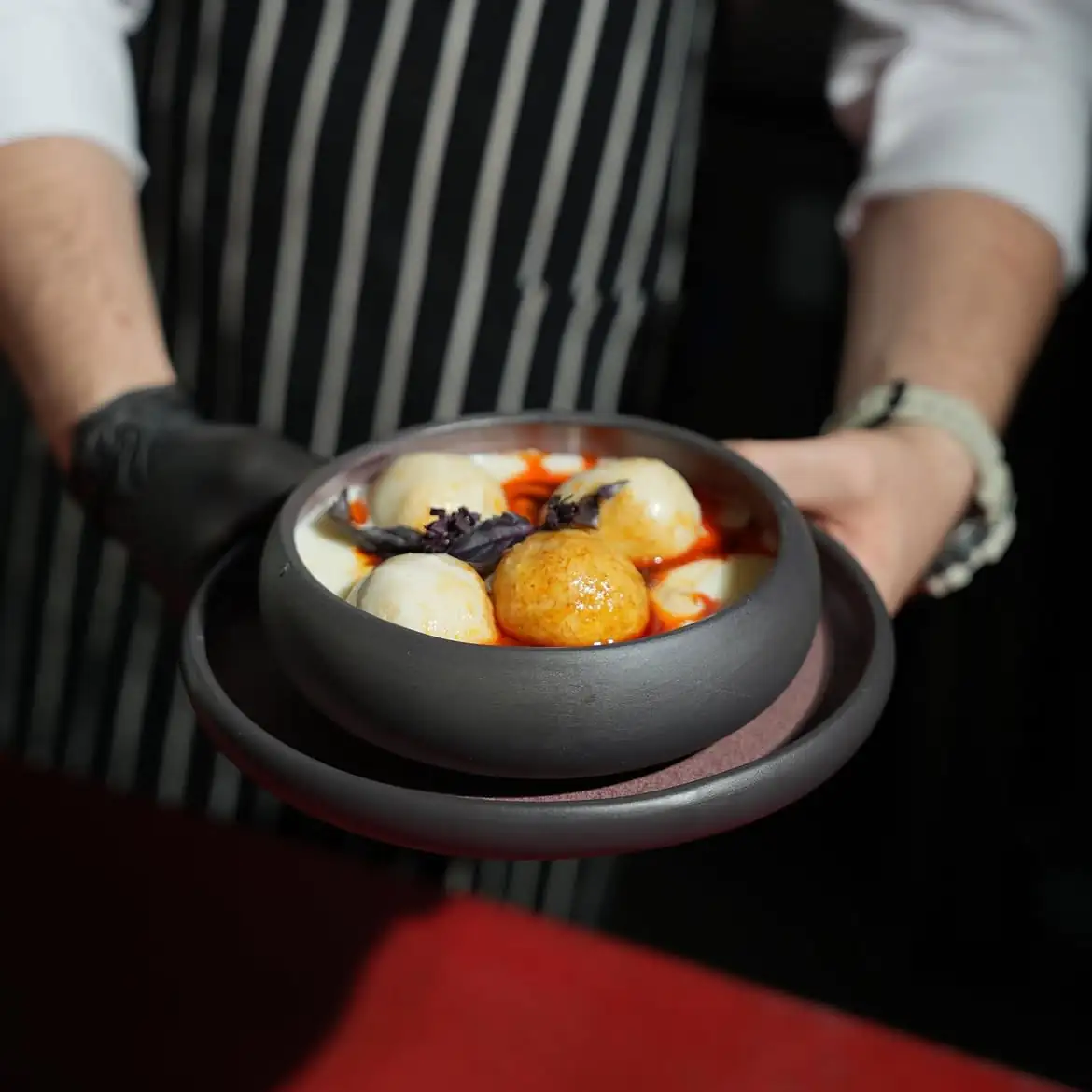
An accessible traditional Mahir Köfte recipe attributed to the Malatya Governorate uses cracked wheat, flour, yogurt drink, garlic, butter and minced meat. The bulgur-based mixture is formed into small köftes, cooked in yogurt drink and topped with a minced-meat sauce.
The version of Mahir Köfte offered today by Çakı Restoran, however, has a different character.
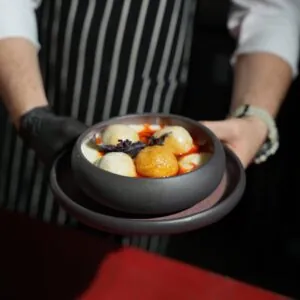
In its own gastronomic description, the restaurant presents Mahir Köfte as a köfte distinguished by its evenly browned exterior, tender interior and the pronounced natural flavour of the meat.
Therefore, rather than asserting that “this is the one and only immutable recipe” for Mahir Köfte, it is more accurate to say that, within Malatya’s rich and living köfte culture, one may encounter a variety of interpretations.
Why Do Different Interpretations of the Same Dish Arise?
In regional cuisine, recipes do not always emerge as fixed formulas.
For many years, recipes have been passed down from mother to daughter, from master to apprentice, and from one neighbour to another.
The bulgur used in one household may vary.
Another family might use a greater quantity of meat.
While a dish is being boiled in one village, it may be served in a different form just a few kilometres away.
When the recipe moves into a restaurant kitchen, it may be reinterpreted once more.
It is therefore unsurprising to encounter different methods of preparation under the same name within Anatolian cuisine.
What truly matters is that the interpretation on which the dish is based is conveyed accurately.
How Extensive Is Malatya’s Variety of Köfte?
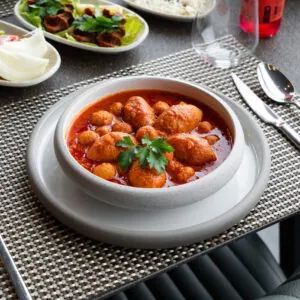
To assess Malatya’s köfte culture solely through Mahir Köfte or İçli Köfte would be to overlook a significant culinary heritage.
Analı Kızlı (Stuffed Bulgur Dumplings)
In Analı Kızlı, one of Malatya’s best-known köfte dishes, large stuffed köftes and small bulgur köftes are brought together in the same meal.
The larger köftes, referred to as “Anne”, are filled with a savoury mixture. The smaller köftes, known as “Kız”, are prepared without filling and are cooked together in tirit.
Even the name of the dish reflects the warm connection that Malatya cuisine establishes between recipes and everyday life.
Sıkma Köfte (Bulgur Dumplings)
In Sıkma Köfte, cracked wheat and simit bulgur come together.
The kneaded mixture is shaped into small pieces, boiled, and then finished with tomato paste-infused oil.
This recipe is one of the finest examples demonstrating that the use of meat is not indispensable when the term “köfte” is employed.
Pumpkin Köfte
The pumpkin köfte, however, takes the concept in an altogether different direction.
Small köftes made with minced meat, fine bulgur and lentils are cooked alongside sweet pumpkin. The combination of distinct flavours such as molasses and garlic yoghurt in this recipe illustrates just how bold Malatya cuisine is in balancing sweet, salty and sour tastes.
Sour Köftes
Among the sour köfte varieties of Malatya cuisine, ingredients such as spinach, lentils, cracked wheat and sour plum may be used.
Thus, the same word “köfte” may refer, in one context, to a meaty main dish with bulgur, and in another, to a vegetable-based, sour stew.
It is precisely this diversity that makes a search for Malatya köftesi so intriguing.
Regional Dumplings Why Do They Vary from One Region to Another?

Geography exerts a direct influence on the development of dishes in Anatolian cuisine.
The grains grown in the region, livestock-rearing practices, seasonal conditions, preservation methods and ways of daily life all shape the recipes of its cuisine.
Consequently, while köfte in one Turkish city may consist almost entirely of meat, in another bulgur, lentils, or vegetables may become the principal ingredient of the köfte.
Malatya’s köfte culture is particularly rich in this respect.
Thanks to the widespread use of bulgur, the köfte tradition endures even in recipes where meat is absent or used sparingly.
In recipes that do include meat, the balance between bulgur and meat comes to the fore.
Even the Shape of Köfte Can Reveal Its Region
Regional variation is not confined to ingredients alone.
The size, shape, and cooking method of the köfte also differ.
Some köftes are formed by squeezing them with the fingers.
Others are rolled in the palm of the hand.
Stuffed köftes are hollowed out with delicate precision.
In köftes wrapped in small leaves, such as cherry leaves, the filling is used in quantities even smaller than a hazelnut.
Therefore, making köfte in Anatolian cuisine is often more than simply mixing and shaping the ingredients.
It requires both handiwork and skill.
What Distinguishes Mahir Köfte from Other Köftes?
The first thing that makes Mahir Köfte interesting is that its name is not as widely known as other Malatya dishes.
Almost everyone knows içli köfte.
Analı kızlı is a dish known in various cities across Turkey.
Mahir Köfte remains one of the regional names yet to be discovered.
In its commentary on Mahir Köfte, Çakı Restoran particularly highlights the balance between the seared exterior and the tender interior. The restaurant also describes the persistence of the meat’s natural flavour as one of the dish’s defining characteristics.
As it stands, the interpretation at Çakı Restoran offers a dining experience that differs from some of Malatya’s traditional meatball varieties, which are prepared with bulgur and yogurt.
Rather than concealing this difference, explaining it openly is more valuable in showcasing the living and evolving side of regional cuisine.
How Do Traditional Dishes Endure in Restaurant Kitchens?
The only way for local dishes to survive to this day is not through home kitchens.
Restaurants have also become one of the important parts of this cultural transmission.
However, there is a delicate balance here.
On the one hand, the regional identity of the food must be preserved.
On the other hand, the service time of a professional kitchen, portion standards, presentation approach, and the expectations of today's guests must be taken into account.
Sometimes, the traditional recipe is applied in as identical a manner as possible.
Sometimes, a regional dish is reinterpreted using the techniques of contemporary restaurant cuisine.
The important thing is that the two approaches are not confused with one another.
The Mahir Köfte example also becomes interesting right here.
At Çakı Restoran, Mahir Köfte
Mahir Köfte features on Çakı Restoran’s current menu, appearing both in the Malatya section and among the main courses.
Its price is listed on the current online menu.
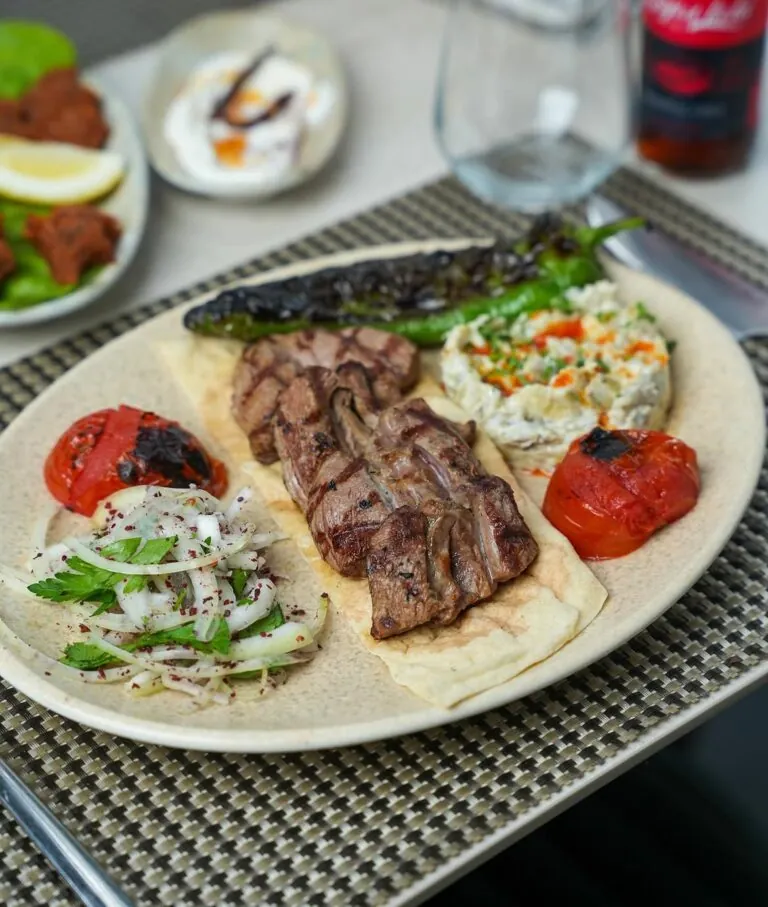
On the Malatya menu, Mahir Köfte is accompanied by a range of distinctive regional dishes, including İçli Köfte Haşlama, Cherry Leaf Rolls, Malatya-Style Cheesy Bread, Çakı Kebab, and Geleli Kebab.
Mahir Köfte is therefore better understood alongside the other Malatya dishes on the table, rather than in isolation.
On one side, boiled İçli Köfte.
On the other, cherry leaves.
On another side, grilled Geleli.
And on yet another side, Mahir Köfte.
This menu layout makes it clear just how different dishes originating from the same city can be.
As menus and prices may change over time, it is advisable to check the current menu before visiting.
Başakşehir — Discovering Malatya’s Köfte Culture

Those wishing to explore Anatolian cuisine in Istanbul are no longer confined to the more familiar varieties of kebab or manti.
Less well-known regional dishes are also gradually attracting attention.
For those seeking Başakşehir Anatolian cuisine and Başakşehir regional dishes, encountering lesser-known dishes such as Mahir Köfte offers an opportunity to discover the more unconventional facets of Anatolian cooking.
At this point, one of the strongest aspects of Malatya cuisine is its variety.
The same city can produce dozens of different kinds of köfte from bulgur.
Meat produces a different result.
Yoghurt brings another variation.
Vegetables add another dimension.
Wrapping the mixture in leaves produces yet another result.
To appreciate Malatya cuisine, it is better to consider the whole table rather than judge it by just a few of its best-known dishes.
Lesser-Known Anatolian Flavours in Başakşehir
Çakı Restoran’s approach of being “the strongest destination for Anatolian cuisine in Başakşehir, from breakfast to kebabs” truly comes into its own precisely where such lesser-known dishes find a place on the menu.
The presence on a single table of distinct flavours associated with Malatya—Geleli Kebabı, Kiraz Yaprağı Sarması, haşlama İçli Köfte and Mahir Köfte—offers the opportunity to explore Anatolian cuisine not merely through its most popular dishes, but also via more local tastes.
For those planning a quiet, carefully considered meal with family on Istanbul’s European Side, wishing to introduce guests from outside the city to diverse examples of Turkish cuisine or to sample lesser-known recipes among Başakşehir’s regional dishes, this variety adds a further dimension of curiosity to the table.
In a stylish yet warm restaurant setting, ordering a dish whose name you have never heard before can sometimes be one of the most delightful aspects of culinary exploration.
Mahir Köfte evokes precisely such curiosity:
“What exactly is this dish?”
And sometimes, the most rewarding way to discover Anatolian cuisine begins with this very question.
Frequently Asked Questions
What is Mahir Köfte?
Mahir Köfte is one of the regional names for a type of köfte associated with Malatya cuisine. While traditional sources available refer to a preparation made with bulgur and ayran, Çakı Restoran presents its Mahir Köfte as a distinct restaurant interpretation: externally seared, with a tender interior and a pronounced meat flavour.
Is Mahir Köfte from Malatya?
Recipes attributed to Malatya cuisine do mention Mahir Köfte, and Çakı Restoran also features the dish on its Malatya menu. However, as no geographical indication has been registered for Mahir Köfte to date, it is more accurate to speak of diverse regional interpretations rather than a single, standardised recipe.
Why are Malatya köftes distinctive?
In Malatya cuisine, the term köfte does not refer exclusively to meatballs. A wide variety of köfte preparations exist, incorporating bulgur, cracked wheat, meat, lentils, vegetables, and various leaves.
What regional köfte varieties does Malatya have?
Analı Kızlı, Sıkma Köfte, Kabaklı Köfte, various tangy köftes, as well as potato- and lentil-based çiğ köftes are among the documented examples in Malatya cuisine.
Is bulgur used in Malatya köfte?
Yes. Bulgur is one of the staple ingredients in many traditional köfte recipes from Malatya. In dishes such as Analı Kızlı Köftesi and Polat İçli Köftesi, bulgur is used alongside meat.
Is Mahir Köfte available at Çakı Restoran?
Yes. Mahir Köfte appears on both the Malatya and main course menus at Çakı Restoran. It is listed on the current online menu. Menus and prices may change over time.