
Why Is It Fried in Some Regions and Boiled in Malatya?
İçli köfte does not bring the same dish to everyone’s mind. For some, it is a crisp, fried dumpling with pointed ends. For others, it is a soft, home-cooked dish, freshly lifted from hot water and finished with a drizzle of butter.
In fact, neither is incorrect.
Across Anatolia’s cities, the same basic idea has taken very different forms through local ingredients and cooking habits. İçli köfte is fried in Şanlıurfa, either fried or boiled in Gaziantep, and cooked in hot oil under the name Irok in Mardin. In Malatya, it changes noticeably: the traditional recipe is boiled in salted water rather than fried, then finished with hot butter.
It is precisely this that makes the distinctions among the varieties of içli köfte so intriguing. To observe how the same dish transforms across Anatolia’s diverse tables is, in essence, to trace the contours of regional culinary culture.
So, why is boiled içli köfte particularly associated with Malatya cuisine, and in what ways does it differ from fried içli köfte?
İçli Köfte Is Not a Single Recipe Across Anatolia
The basic principle of içli köfte is quite familiar.
An outer layer, predominantly made of bulgur, is prepared; minced meat and onion, among other ingredients that vary by region, are placed inside; the köfte is sealed, and then cooked.
However, from this point onward, the recipes begin to diverge.
One city adds walnuts, while another employs different spices. In some regions, the outer shell contains meat, whereas elsewhere the composition may vary. Among the most notable distinctions is the cooking technique.
Fried İçli Köfte
The köfte prepared according to the traditional içli köfte recipe published by the Şanlıurfa Metropolitan Municipality is fried in oil before serving. In Mardin’s traditional Irok recipe, too, the filled köfte is fried in hot oil.
This method results in a crispier, more thoroughly fried outer layer.
Variants That Are Both Boiled and Fried

Regional distinctions do not always correspond to a clear-cut division between “boiling and frying”.
For instance, the official production specifications for Gaziantep İçli Köftesi, which holds a geographical indication, state that the köfte can be prepared by frying in hot oil or boiling in water. Recipes from Kahramanmaraş likewise show that boiled köfte may be served as such or fried afterward.
These examples convey an important point: the varieties of içli köfte across Anatolia cannot be distinguished solely by their shapes. The cooking method is equally integral to the dish’s regional identity.
What Sets Malatya İçli Köftesi Apart?
When it comes to Malatya, however, the choice of cooking method extends beyond mere preference.
Malatya İçli Köftesi has been officially registered as a geographical indication by the Turkish Patent and Trademark Office on 10 August 2021, under registration number 846. Its geographical boundaries are defined as the province of Malatya.
The distinctive description set forth in the registration document is quite clear:
Malatya İçli Köftesi is not deep-fried. Medium bulgur is used, the dumplings are boiled in salted water, and melted clarified butter is poured over them at service. The absence of tomato paste in the filling is another feature that distinguishes the traditional recipe.
Thus, when referring to Malatya içli köfte, boiling is not merely a lighter cooking alternative but an integral part of the dish’s regional identity.
How Is the Outer Filling of Malatya İçli Köftesi Prepared?
In the protected recipe, the base of the outer layer is made from yellow, medium-ground bulgur produced in Malatya.
Several times minced lean beef, red pepper flakes, salt, and water are added to the bulgur and kneaded until the dough reaches a paste-like consistency. The dough must hold together without crumbling when handled.
Two details here warrant attention.
The first is the use of meat in the outer shell as well.
The second is that the outer dough should be prepared as thinly as possible.
Why Does Shaping a Thin Shell Require Such Skill?
The registration document for Malatya içli köfte specifically notes that its preparation requires particular expertise.
The dough is held in the palm and hollowed out with a finger to form a thin, elongated shell. Once the cooled minced-meat filling is added, the opening is carefully sealed.
The registered recipe specifies dumplings approximately 8 to 9 centimetres long, with a thin outer shell.
If the outer layer is too thick, bulgur dominates the dish. If it is too thin, the dumplings risk falling apart during boiling.
The mastery lies precisely between these two points.
Why is İçli Köfte boiled in Malatya?

It would not be accurate to explain the answer to this question simply as “to make it lighter”.
Boiling is the officially defined traditional method of preparing Malatya İçli Köfte. The dumplings are carefully placed into simmering salted water, cooked for approximately five minutes without stirring, and then removed individually using a strainer.
The hot dumplings, once arranged on a plate, are then drizzled with clarified butter.
Consequently, the fat has not been entirely omitted from the recipe. Rather than being used solely as frying oil, it is incorporated into the dish at the serving stage with a buttery aroma.
How Does Poaching Alter the Flavour?
Among the first sensations experienced when frying are the crisp texture formed on the surface and the roasted aroma.
In poaching, by contrast, the character of the bulgur outer layer remains softer. No hard crust forms between the filling and the outer dough.
In the Malatya interpretation, when hot butter is added on top of this, a dish emerges that is quite distinct from fried stuffed bulgur dumplings.
Neither is a deficient or superior version of the other. They are two distinct interpretations of the same culinary concept, developed across different regions.
Why Is the Absence of Tomato Paste in the Filling Important?
Another detail that distinguishes Malatya içli köfte from some regional variations is the use of tomato paste.
The TÜRKPATENT registration specifically states that tomato paste is not added to Malatya içli köfte’s filling. The filling is prepared with medium-fat minced beef, onion, butter, black pepper, red pepper flakes and salt.
The minced beef and onion are first sautéed separately, then combined in the same pan and cooked for a short while longer. They are left to cool before being used to fill the köfte.
This straightforward use of ingredients allows the individual characters of the meat, onion, bulgur and butter to be more distinctly perceived.
Why is İçli Köfte a Special-Occasion Dish in Malatya?
To regard içli köfte’s place in Malatya culture merely as a daily meal would also be incomplete.
The geographical-indication registration notes that Malatya İçli Köftesi is traditionally served at weddings, ceremonies, festivals and other special occasions.
The reason for this becomes clear when we examine the preparation process.
The preparation of the filling, the prolonged kneading of the bulgur, the individual rolling out of the dough, the careful stuffing and sealing of each dumpling, and the subsequent gentle boiling all demand considerable effort.
Such dishes are seldom prepared on Anatolian tables merely to satisfy hunger. They also signify that a large table will be set, that guests will arrive, or that a special occasion will be shared.
Malatya’s Bulgur Culture Extends Beyond Stuffed Bulgur Dumplings

An overview of Malatya cuisine reveals that bulgur is not confined to stuffed bulgur dumplings alone.
The Ministry of Culture and Tourism’s records on Malatya cuisine document a remarkably extensive bulgur-based culinary tradition, ranging from analı kızlı and sıkma köfte to quince meatballs and various dumplings made with different vegetables and leaves.
Therefore, boiled stuffed bulgur dumplings are far more than merely a recipe that emerged in isolation.
Malatya’s longstanding culinary tradition in processing, kneading, shaping bulgur, and combining it with diverse ingredients finds one of its most celebrated expressions in this dish.
The Anatolian Journey of İçli Köfte: What Does It Truly Tell Us?
To ask “which is the authentic one?” when comparing an içli köfte fried in Şanlıurfa with one boiled in Malatya is hardly the right way to understand Anatolian cuisine.
This is because both may represent the authentic recipe of their respective regions.
Gaziantep’s interpretation, which embraces both boiling and frying, Mardin’s Irok, Şanlıurfa’s fried stuffed bulgur dumplings, and Malatya’s boiled dumplings served with butter all illustrate how the same dish has diversified across the geography.
The richness of Anatolian cuisine lies partly in this very diversity.
The recipe changes from city to city: the bulgur used varies, the spices vary, and the cooking technique varies. Yet the tradition of bringing people together around the table endures.
Başakşehir: Where to Eat Haşlama İçli Köfte?
One of Istanbul’s examples of this geographically indicated culinary tradition from Malatya can be found on the menu at Çakı Restoran.
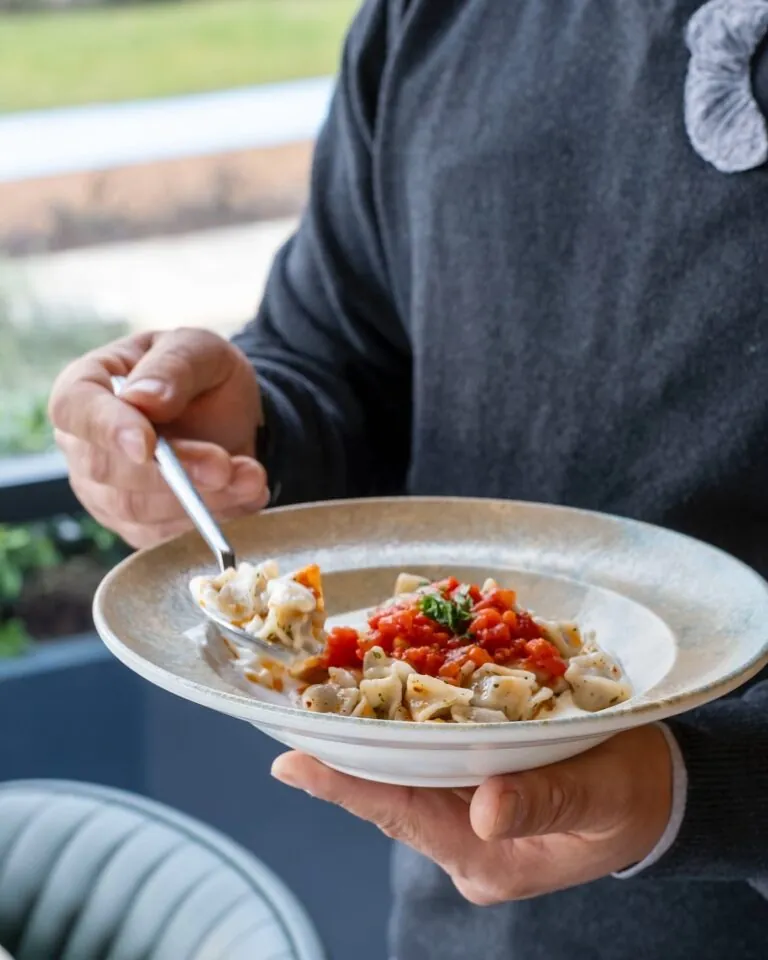
On Çakı’s current Malatya menu, the dish appears directly under the name “Stuffed Bulgur Dumplings in Broth” and is also marked as The Chef’s Choice. Its price on the current online menu is 280 TL. Within the same Malatya section, further regional options include Mahir Köfte, Cherry Leaf Rolls, Malatya-Style Cheesy Bread, and Geleli Kebab.
For someone seeking Başakşehir regional dishes, this diversity offers more than merely the chance to sample a single Malatya dish; it provides the opportunity to witness the city’s differing culinary traditions at one and the same table.
Given that the menu and prices may change over time, it is advisable to check the restaurant’s current menu prior to visiting.
Exploring Anatolian Cuisine in Başakşehir, with Its Regional Distinctions
The value of regional cuisine should not be sought solely in bringing its well-known dishes to Istanbul.
The essential matter is preserving the character of the recipe.
Although the fried version of içli köfte is more widely known, the menu’s deliberate inclusion of boiled içli köfte is significant in demonstrating Malatya cuisine’s distinctive cooking tradition.
Çakı Restoran also describes its culinary approach as bringing together traditional Malatya flavours with modern kitchen techniques, and stresses that it regards its guests as family.
The approach of “the most compelling destination for Anatolian cuisine in Başakşehir, from breakfast to kebab” can also be seen reflected here. A table that features not only familiar kebabs but also dishes embodying their own regional techniques—such as Cherry Leaf Rolls, Geleli Kebab, and Malatya İçli Köfte—reveals the true diversity of Anatolian cuisine.
For those wishing to gather with family at a long table on Istanbul’s European Side, offer visitors from outside the city a distinctive Turkish culinary experience, or discover lesser-known regional recipes within Başakşehir’s Anatolian cuisine, boiled içli köfte provides an excellent introduction that goes beyond the conventional fried version.
Whether a köfte is placed in hot oil or boiling water may seem like a minor culinary detail. In Anatolia, however, it is precisely such a small detail that sometimes reveals the dish’s city of origin.
Frequently Asked Questions
Is Malatya içli köfte boiled?
Yes. In the traditional preparation of Geographically Indicated Malatya İçli Köftesi, the köftes are boiled in salted water. Not being fried in oil and having clarified butter poured over them after boiling are among its distinguishing features.
Is Malatya İçli Köftesi geographically indicated?
Yes. Malatya İçli Köftesi was registered as a geographical indication on 10 August 2021 under registration number 846. Its geographical boundary is the province of Malatya.
Why is içli köfte fried in some regions and boiled in others?
İçli köfte has developed distinct preparation techniques across Anatolia’s various regions. In places such as Şanlıurfa and Mardin, frying predominates, whereas Malatya’s registered method involves boiling. In Gaziantep, both frying and boiling may be employed.
What does Malatya içli köfte contain?
In the registered recipe, the filling is prepared with medium-fat minced beef, onion, butter, black pepper, red pepper flakes and salt. The traditional Malatya recipe does not use tomato paste in the filling.
What is poured over Malatya İçli Köfte?
After being boiled and drained, the köftes are served hot with melted butter poured over them.
Is boiled içli köfte available at Çakı Restoran?
Yes. Boiled İçli Köfte features on Çakı Restoran’s Malatya menu and is listed as the Chef’s Choice. Its price is listed on the menu at the current website.